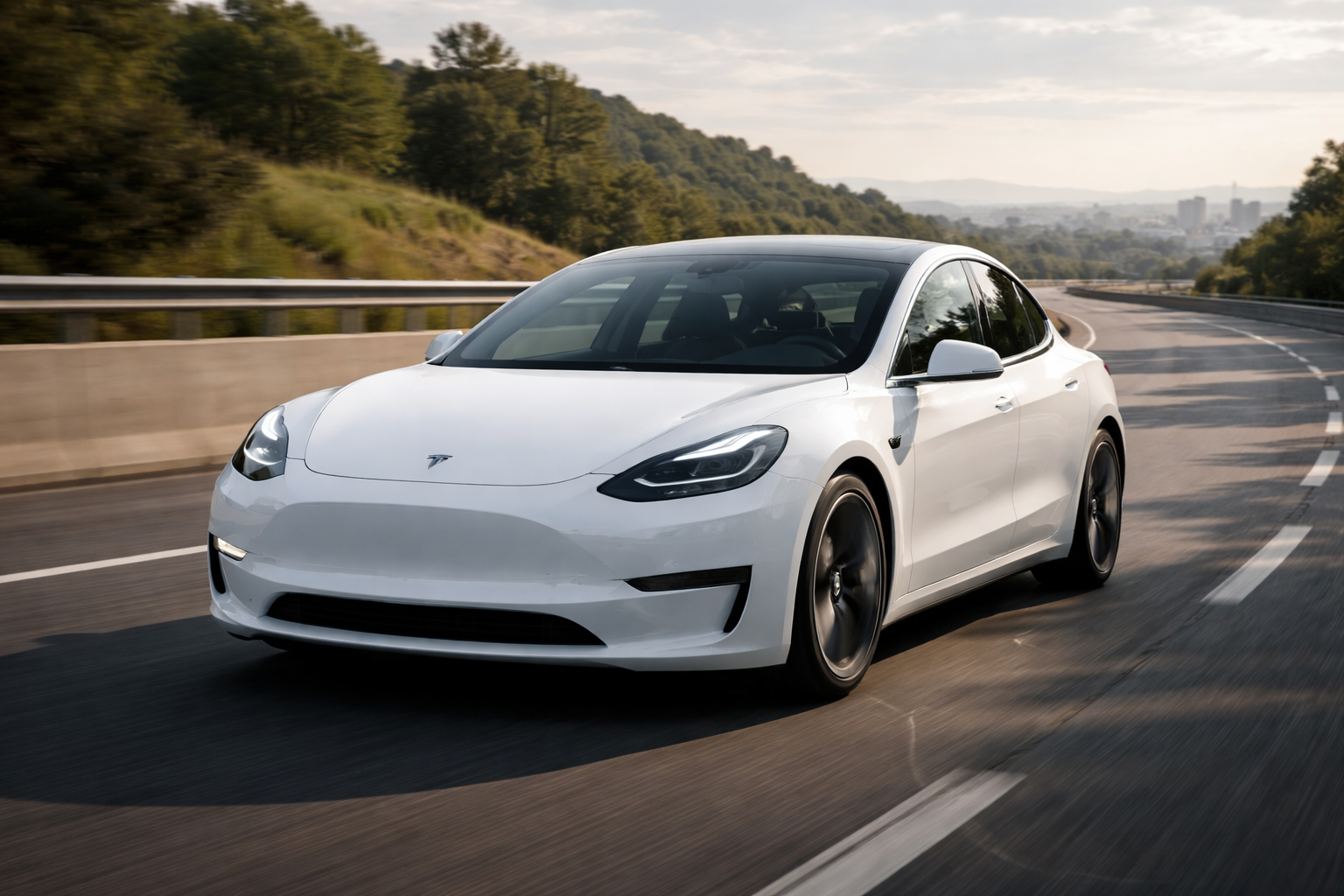
Shares of Tesla remained under pressure on Friday, extending a weak run as investors weighed softer delivery expectations, geopolitical risks, and uncertainty surrounding CEO Elon Musk’s long-term strategy.
The stock fell 3% on Friday, adding to recent losses that have left it down sharply over the past three months.
The electric-vehicle maker is now attempting to halt a five-week losing streak, its longest since early 2025, but sentiment remains fragile as markets await key catalysts, including first-quarter delivery data and developments tied to Musk’s broader business ecosystem.
Delivery expectations take center stage
Investor focus is firmly on Tesla’s upcoming first-quarter delivery report, due April 2, which is widely seen as a near-term test of demand.
Analyst estimates compiled by the company point to roughly 366,000 vehicles delivered, implying about 8%–9% year-over-year growth.
However, forecasts vary. RBC Capital expects around 367,000 units, while UBS projects a more conservative 345,000 deliveries.
The divergence highlights uncertainty around demand trends, particularly after the expiration of the $7,500 US federal EV tax credit and a slow start to the year for Chinese EV sales.
Tesla sold 418,227 vehicles in the fourth quarter of 2025 and 336,681 units in the first quarter of 2026, underscoring the seasonal variability in its business.
Despite the importance of these figures, some analysts question their influence on the stock. UBS analyst Joseph Spak wrote: “Do deliveries even matter?” He added, “While we expect sentiment will continue to overwhelmingly drive the stock (certainly more than auto deliveries), it is (primarily) the auto business that helps fund Tesla’s cash flow and hence their investment for growth.”
That dynamic reflects a growing disconnect between Tesla’s valuation—often tied to future technologies—and its current reliance on vehicle sales for revenue.
Musk’s broader bets add complexity
Beyond deliveries, Tesla’s narrative is increasingly tied to Musk’s wider ambitions, including robotaxis, humanoid robots, and artificial intelligence.
These initiatives have captured investor imagination but remain largely unproven from a revenue standpoint.
The company has also deepened ties with Musk-led ventures such as SpaceX and xAI.
Tesla invested $2 billion into xAI in 2025, which was later acquired by SpaceX, and the companies are collaborating on a semiconductor manufacturing project known as “Terafab.”
Reports that SpaceX may allocate up to 30% of its potential IPO shares to retail investors have also drawn attention, particularly given Tesla’s unusually high retail ownership.
Retail investors hold about 40% of Tesla’s publicly traded shares—roughly double the level seen in other large technology firms.
While there is no direct correlation between SpaceX developments and Tesla’s stock yet, the growing interconnection between Musk’s ventures is beginning to shape investor perceptions.
Stock pressured by sentiment, geopolitics
Tesla shares have also been weighed down by broader market dynamics and geopolitical developments.
The stock has fallen about 8% since hostilities involving Iran began in late February, reflecting heightened risk aversion across equities.
Over a longer horizon, Tesla is down roughly 23% over the past three months, highlighting sustained pressure on the shares.
Analysts note that sentiment, rather than fundamentals alone, is playing an outsized role in driving price action.
At the same time, Tesla faces strategic shifts within its core business. RBC analysts have pointed to the expected discontinuation of Model S and Model X vehicles as part of a broader pivot toward future technologies, a move that could weigh on near-term vehicle sales.
Meanwhile, the company’s financial outlook is under scrutiny.
Tesla’s automotive segment generated $69.5 billion in revenue last year, far exceeding contributions from other divisions. Yet rising capital expenditure—expected to exceed $20 billion this year—could strain cash flow, with some analysts warning that free cash flow may turn negative.
The post Tesla stock struggles as delivery fears and Musk bets test investor faith appeared first on Invezz
