By the time Mission: Impossible — The Final Reckoning hit theaters last May, the marketing narrative had become as famous as the franchise itself. The studio made sure we knew that when Tom Cruise hung off the wing of a biplane at 8,000 feet, he was actually doing it. There were safety riggings, sure, but there were no pixels where the human should be.
Compare that to the reception of recent VFX-heavy blockbusters, where armies of digital artists are employed to create spectacles, at grand scale but without stakes. The audience disconnects. We know nobody is in danger. Audiences struggle to empathize with purely artificial characters, even when the visuals are flawless, because we connect emotionally to agency and risk. When everything can be faked, the premium on what is real skyrockets.
In a previous article, Rise of the Curators, I argued that as AI commoditizes the mundane — automating logic, logistics, and basic creation — humans would ascend the “economic value ladder” toward high-touch, curated experiences.
But there is a second half to that prediction, one that is now unfolding with surprising economic force. We not only seek human curators, we are actively rebelling against the digital itself. An “authenticity recoil” is underway — a consumer-driven pivot back to physical, imperfect, high-friction experiences.
Combine this dynamic with the lingering cultural counterreaction to the isolation of COVID-era restrictions of the early 2020s, and you have a perfect storm for an explosion of deliberately offline human engagement. We won’t all become Luddites and burn our laptops in bonfires; but these tools will likely be increasingly reserved for work and utility, while our recreation and human connection return to the physical.
The Data of the Analog Renaissance
If this sounds too theoretical, the market data beg to differ. The economic indicators of 2024 and 2025 show a distinct capital flow away from screens and toward the tactile.
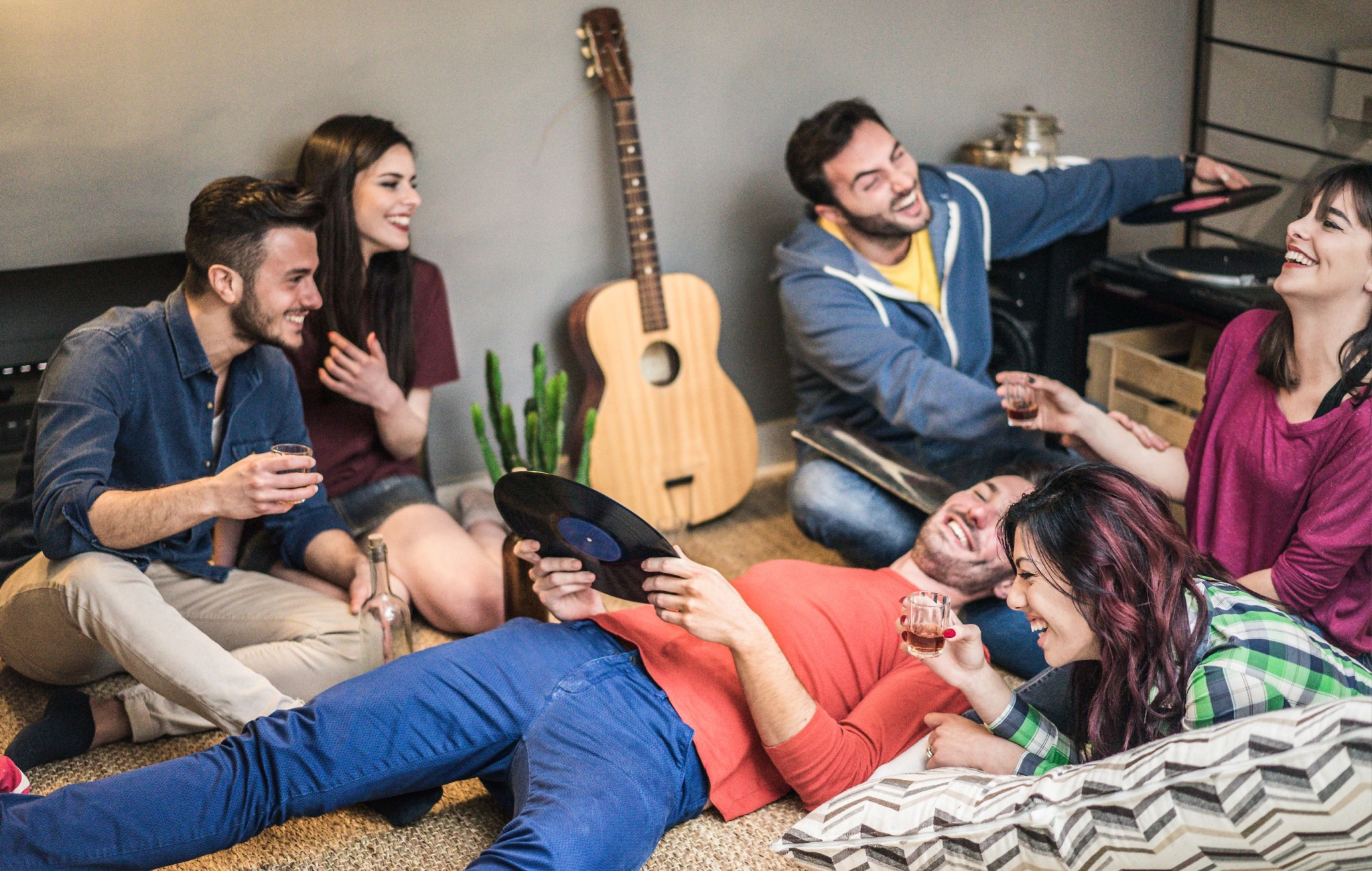
Take the music industry. Vinyl records now decisively outsell CDs, and that gap only widened through 2024 and 2025. This isn’t just Boomer nostalgia buying. The trend is driven largely by people under 40, who are rejecting the algorithmic “perfection” of streaming playlists for the deliberate, tactile ritual of dropping a needle on a groove.
Simultaneously, a deliberate “dumbphone” is no longer a niche choice but a measurable market segment. Global sales of basic feature phones — devices that call, text, and do little else — hit 1.1 billion units in 2024. Buyers are desperate to reclaim their time and attention from the slot-machine mechanics of the smartphone.
Mark Manson presciently captured this thinking in a 2014 article, when he wrote:
Limitless access to knowledge brings limitless opportunity. But only to those who learn to manage the new currency: their attention.
Even photography is regressing, beautifully. Film photography has come roaring back, prompting Kodak to bring Ektachrome E100 back from the dead to meet demand. AI can generate a hyper-realistic image of a sunset in seconds, but people are waiting weeks and paying dollars to see a grainy, imperfect photo they took themselves. Why? Because the film photo is proof of life. They were there, physically, in that moment, creating something real.
Why This Matters: The Loneliness Paradox
This turn toward offline life isn’t just aesthetic. It reflects a growing health concern.
Researchers now describe a loneliness epidemic, intensified by pandemic isolation but rooted in earlier technological shifts. In The Anxious Generation, social psychologist Jonathan Haidt argues that the move from a “play-based childhood” to a “phone-based childhood” deprived young people of the in-person social experiences that build emotional resilience and empathy.
Beginning in the early 2010s, rates of anxiety and depression rose in close correlation with smartphone-centered social life. AI threatens to extend this pattern in adulthood. As interaction becomes easier to simulate, the temptation to replace embodied relationships with digital ones grows — even as their emotional limits become clearer.
Face-to-face rebounded quickly once COVID-era restrictions were lifted. Zoom spiked from 82,000 customers in 2019 to 470,000 in 2020, down to 191K in 2021, as soon as people felt free to gather again. That rebound to the real revealed something fundamental: digital tools can transmit information, but they struggle to reproduce the full emotional bandwidth of physical presence.
Our brains evolved in physical communities, not virtual ones. The current revival of in-person experience is not nostalgia. It is adaptation — a response to a world where efficiency has outpaced meaning, and where presence has become scarce.
The “Offline Premium”
Both social research and market trends show people are actively pushing back against digital saturation. Clear economic signals indicate people value presence more than ever.
Digital detoxing, or intentionally limiting or stopping the use of digital devices, has become a mainstream cultural phenomenon. One recent Harvard-linked study found a one-week break from social media was associated with improvement in depressive symptoms (24.8 percent), anxiety (16.1 percent), and insomnia (14.5 percent). Unplugging can protect our mental health.
Hybrid work, even for tech-heavy fields, indicates leaders are considering how to maximize in-person, undistracted connections.
Communal dining is increasingly popular, as Gen Z patrons have embraced the awkwardness of connecting with strangers over a meal. In doing so, they’ll rediscover a depth of conversation that inherently requires presence.
These are not retrograde moves; they’re economically rational responses to what machines can’t do. AI struggles to generate genuine surprise, nuance, empathy, or emotional resonance. Humans are wired to.
The Rise of High-Fidelity Spaces
This recoil from the digital is even reshaping the “experience economy.” We are moving beyond “curated experiences” (like a travel plan) to “curated restrictions.”
Consider the explosion of vinyl “listening bars” across the US and Europe over the last year. Modeled after the Japanese kissaten, these venues are dedicated to high-fidelity audio. They often have strict rules: no shouting, no flash photography, sometimes no phones at all. You are there to listen.
Similarly, the use of Yondr pouches — locking phone cases that create phone-free spaces — has exploded. The company recently celebrated facilitating over 20 million phone-free experiences at concerts, schools, and comedy shows. Artists are realizing that to create a “transformation” (the highest rung of the economic ladder), the audience must be severed from the digital tether.
Until recently, curators excelled by helping you find the best digital content. In the new economy, the curator’s job is (at least sometimes) to build a wall against the digital content, creating a sanctuary where genuine human connection can occur.
The Economic Pivot in Perspective
Any business relying solely on digital scalability and optimization is betting against a rising tide of human desire. AI will drive the marginal cost of derivative, re-combinatorial content creation to zero, which means the monetary value of digital content will also approach zero.
The value is in using AI and other tools to migrate and gain efficiency in core offerings of things AI cannot forge by itself: the heat of a crowd, the scratch of a record, the risk of a stunt, the silence of a phone-free room.
I use digital tools constantly and deeply in all of my work. But last weekend I woke up on Saturday morning and I didn’t log into a digital world. I built a fire. I listened to records — full albums, side A to side B. I read a book. I talked with my wife, while our girls cuddled up close with floor pillows and some musical instruments. We spent hours enjoying each other’s company with nothing digital in sight.
It was beautiful and refreshing. But more importantly, it felt expensive. It felt like a luxury that the digital world is actively trying to steal.
If you aren’t prioritizing putting yourself physically in a room, across a table, around a fire with people you love and enjoy, you may be missing out on a great gift. And if you are an entrepreneur or investor, you might be neglecting the only asset class that AI cannot inflate away: reality itself.
