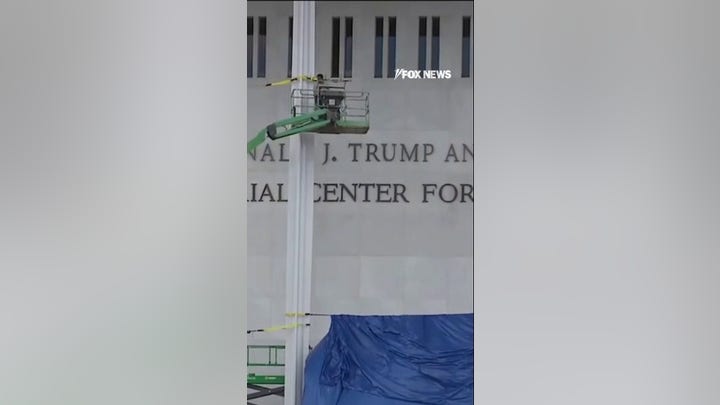
‘What’s in a name? That which we call a rose, by any other name would smell as sweet.’ That question, posed by Juliet in Shakespeare’s ‘Romeo and Juliet,’ seems to now occupy much of Washington. At a Christmas party with many media from Washington, the question was put to me more succinctly and repeatedly as ‘can they do that?’ The ‘that’ was the renaming of the Kennedy Center as the Trump-Kennedy Center. Soon, courts may have to face this quintessentially Shakespearean question, ‘for never was a story of more woe.’
Around Christmas, Ohio Democratic Rep. Joyce Beatty, an ex-officio member of the board, announced her lawsuit over the name change.
As a threshold matter, I will address the legal rather than policy basis for the change. Many of us chafed at the renaming of the center, which was a memorial to an assassinated president. However, what people want to know is whether the change can be challenged. The answer is yes, but it will not necessarily be easy or certain in its outcome.
The center was originally built as the National Cultural Center in a 1958 law. It was renamed the John F. Kennedy Center by an act of Congress in 1964 as a living memorial.
The key issue is how that designation was made. It was contained in a statute passed by Congress. Titled John F. Kennedy Center for the Performing Arts, 20 U.S.C. 3, states that ‘no additional memorials or plaques in the nature of memorials shall be designated or installed in the public areas of the John F. Kennedy Center for the Performing Arts.’
There are exceptions in sections 2 and 3 of the provision:
‘(2) Paragraph (1) of this subsection shall not apply to—
(A) any plaque acknowledging a gift from a foreign country;
